

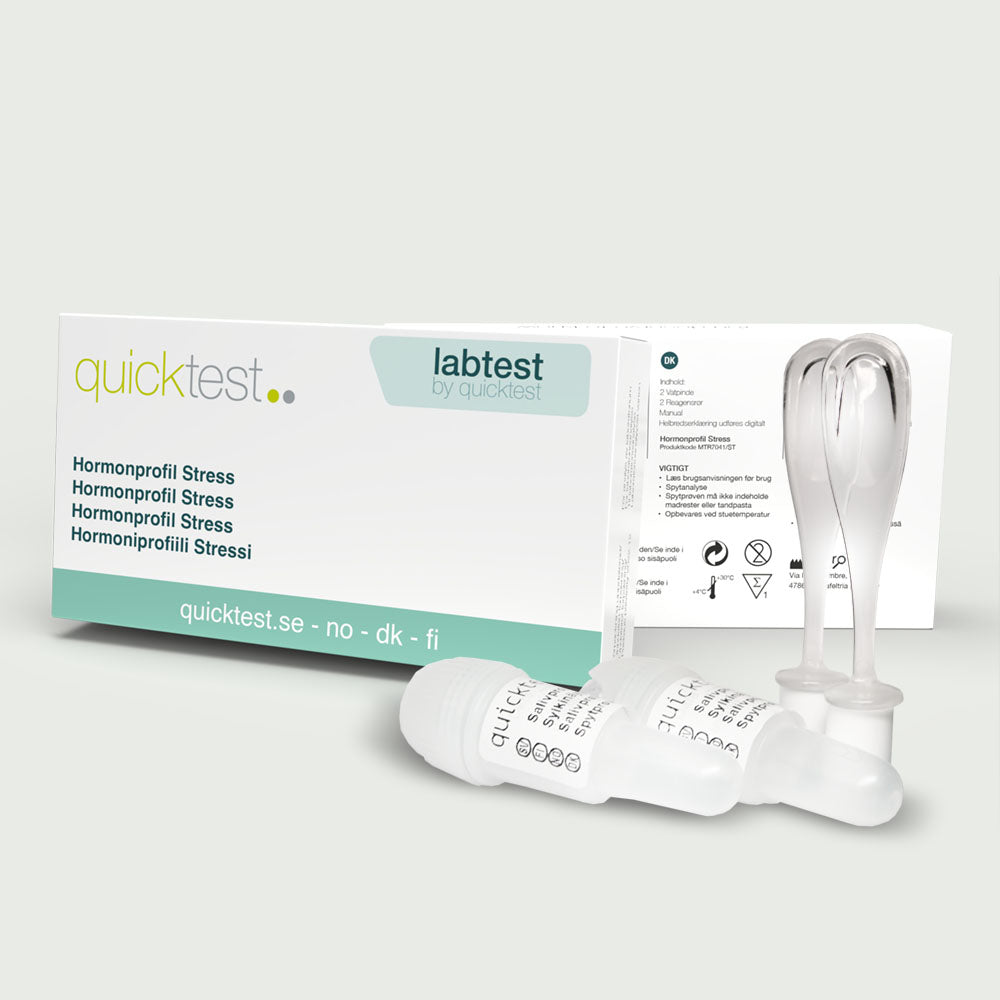


Cortisol and DHEAS - How are they related?
Cortisol and DHEA are both hormones produced and secreted by the adrenal glands. Cortisol regulates energy and is produced in stressful situations. An elevated level of cortisol is therefore an indication of stress. In the hormone DHEAS (dehydroepiandrosterone sulfate) the body has developed a protective mechanism against the negative effects of stress. Therefore, the balance between cortisol and DHEA is particularly important. When we are stressed and have high cortisol release over time, an imbalance can occur between the hormones and the adrenal glands simply cannot maintain the production of the stress hormone cortisol. Adrenal fatigue means that after a long period of severe stress, the adrenal glands reduce the production of the hormones. cortisol and DHEAWhen the adrenal glands do not produce the hormones they should, the body's ability to handle stress and fight infections is impaired. By measuring the values, you can find out exactly what the values are and thus detect any imbalances.Low or high DHEA levels
Your sex drive, sleep, stress and weight management can be affected by your levels of DHEA. For low levels DHEA can cause symptoms such as fatigue, depression, decreased sex drive and obesity, while too high levels can lead to symptoms such as PCOS, acne and hair loss. Because DHEA is a so-called prohormone, precursor to other hormones in the body, it also has an impact on the hormone balance for estrogen and testosterone. Note that DHEA levels are linked to age, with the highest levels being in young adulthood, then levels decrease with age.Low or high cortisol levels
Cortisol levels fluctuate throughout the day, and it is therefore important to take several measurements throughout the day to get your complete curve of adrenal cortisol production. A healthy cortisol curve should be highest in the morning and gradually decrease during the day. Today, however, many people are troubled by stress, and it has become more common to have curves that are too low, too high, too flat, or even inverted. Both low and high cortisol levels are associated with stress. Initially, stress leads to an increased production of cortisol, but with prolonged stress, cortisol production decreases.Symptoms of tired adrenal glands
- You have low energy, often feel tired
- You have difficulty getting up in the morning.
- Weight gain
- You have low or no sex drive
- You feel cravings for sweets and carbohydrates, especially in the afternoon and evening
- You have a craving for salt.
- As a woman, you have severe PMS and menopausal symptoms
- You are susceptible to infections and often sick
- You may feel dizzy when you stand up too quickly.
What is analysed
- Cortisol and DHEA


